Five days in, three conversations
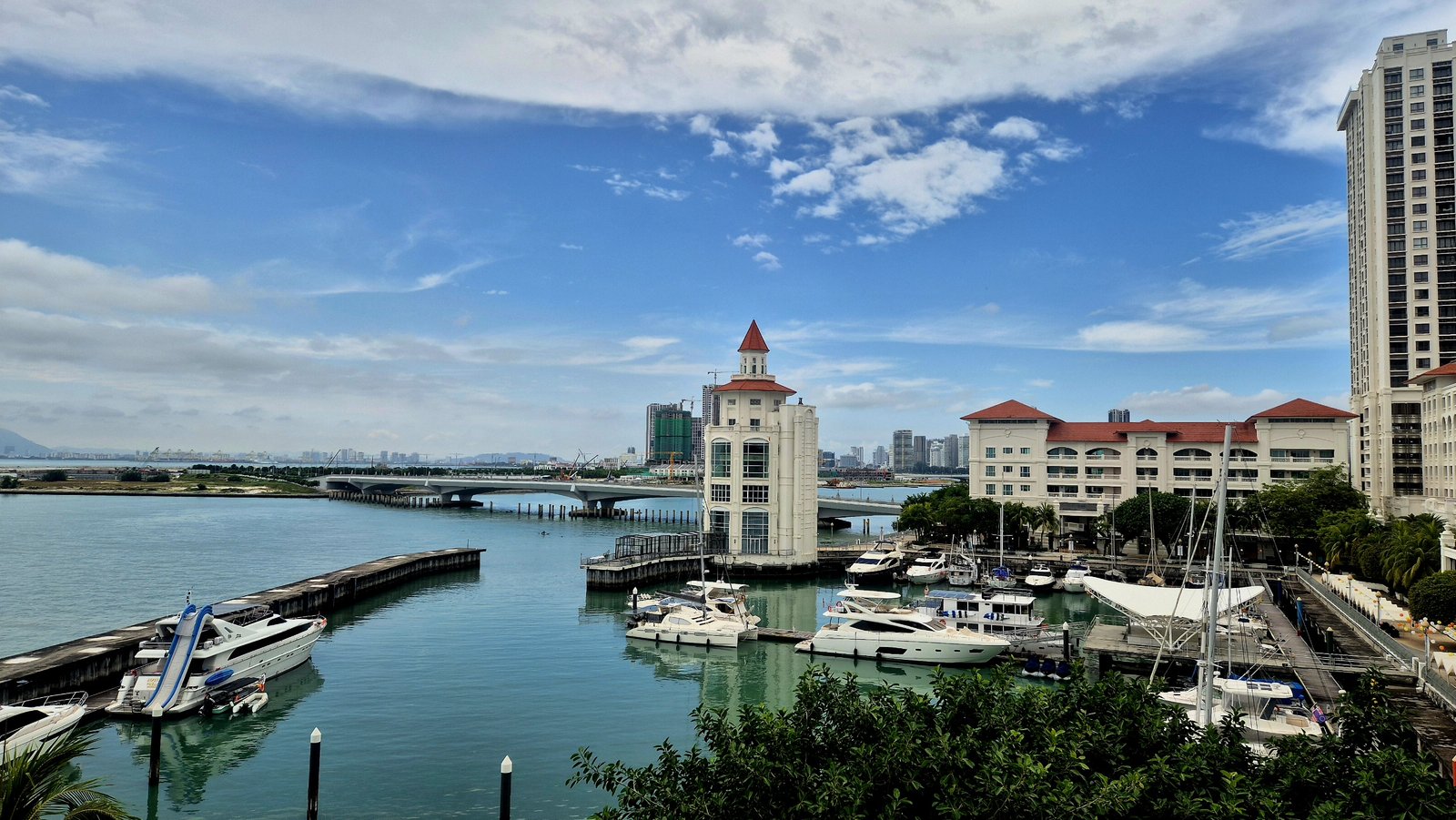
Five days into Penang and I'd already had three separate conversations about buying property here.
So I did what I always do. I went and checked.
Malaysia is not Indonesia. No PT PMA, no holding company in Singapore. Foreigners can own qualifying property directly, in their own name, freehold included. Sounds simple. It isn't. The real question here isn't freehold or leasehold. It's whether this specific property is open to foreigners at all.
The price gate
Each state sets a minimum price for foreign buyers. In Penang it depends on where and what: the island costs more than the mainland, a house more than an apartment.
| Penang | Apartment / condo | Landed house |
|---|---|---|
| Island | RM1,000,000approx €213,000 | RM3,000,000approx €638,000 |
| Mainland (Seberang Perai) | RM500,000approx €106,000 | RM1,000,000approx €213,000 |
Reported Most guides list RM500,000 for mainland apartments; some list RM600,000 instead, possibly a subsale versus new-purchase distinction rather than a straight contradiction. Confirm the exact threshold for your specific property with a licensed Malaysian lawyer before you rely on either number.
Clear the price and you still need approval from the state. Lawyers quote anywhere from four to eight weeks up to several months. Reported There's also money on top of the price for that approval, and it looks like two separate costs rather than one disputed figure: a percentage-based state levy, roughly 3% on the island and 2% on the mainland, payable when the sale and purchase agreement is signed, plus a separate flat RM10,000 to RM20,000 in state consent application and legal processing fees on top of that. Reported I haven't gone through it myself yet. When I do, I'll update this with what it actually was, not what the internet guessed. Until then, get the exact levy and fees confirmed by a licensed Malaysian lawyer before you budget around either.
Some things are closed to foreigners whatever you pay: Malay reserve land, the Bumiputera quota units inside a development, low and medium-cost housing, agricultural land. Landed property is far more restricted than apartments, especially on the island. Title and tenure decide more than the price tag does.
The company workaround that isn't one
The first idea everyone has: buy through a company. I looked into it. A foreign-owned company faces the same price gate, the same state approval, the same closed units. It's the same rules with extra paperwork. Reported
What happens with tax if you later sell the shares instead of the property depends on the structure. That's a lawyer and tax adviser question, not something I'll flatten into one line. For one ordinary property, the yearly accounting and compliance costs usually outweigh the benefit. With three or more properties, a partnership or estate planning, it's a different conversation.
If you don't want to buy at all
Here's a route I hadn't considered: Malaysian REITs, listed property funds on the Kuala Lumpur exchange. No foreign ownership limit, no price gate, no state approval. You open a brokerage account and buy units. Yields have been running roughly 5 to 8% a year. Reported One thing to check before you do this: the withholding tax on distributions to non-residents went up to 30% for the 2026 tax year, replacing the old flat 10%. It's a real change, not a typo, so recalculate the yield before assuming it's the easy option. Reported LHDN Practice Note 2/2026, via several Malaysian tax advisory firms, not yet checked by me directly against the Note itself.
Not the same as a place you can walk into. But if the honest answer to "do I want to deal with all of the above" is no, this is the honest alternative.
Getting residency out of it
Malaysia's long-stay visa, MM2H, was rebuilt in 2024. Buying property used to be optional. Now it's required, and you generally can't sell it for ten years unless you upgrade to something pricier. Official
| Route | Deposit in a Malaysian bank | Property | Visa |
|---|---|---|---|
| MM2H Silver | USD150,000approx €131,000 | RM600,000approx €128,000 | 5 years |
| MM2H Gold | USD500,000approx €435,000 | RM1,000,000approx €213,000 | 15 years |
| MM2H Platinum | USD1,000,000approx €870,000 | RM2,000,000approx €426,000 | 20 years |
| MM2H Special zones, age 21 to 49 | USD65,000approx €57,000 | Set per development | 10 years |
| MM2H Special zones, age 50+ | USD32,000approx €28,000 | Set per development | 10 years |
| Premium Visa (PVIP) | RM1,000,000approx €213,000 | Not required | 20 years |
Official MM2H rows from mm2h.gov.my. All MM2H visas are renewable. If you're 25 to 49 you need to spend 90 days a year in Malaysia; 50 and over, no minimum. Reported PVIP row from licensed agents.
The special zones row is the one to look at twice. The best-known example is Forest City in Johor, a huge development across the water from Singapore that has sat half-empty for years. According to the developer's own guidance, you buy from RM500,000 (approx €106,000) directly from them, complete within 90 days and hold for ten years. You don't have to live there. Reported Cheaper door, but a single development with a long track record of struggling to fill up. I'd go and look before I believed anything.
The Premium Visa skips property completely, with full work rights and no minimum stay. The bar is income: about RM40,000 (approx €8,500) a month, plus a RM200,000 (approx €42,500) government fee. It used to be offshore income only. Since a March 2026 revision, onshore income or net worth can qualify too, which opens the door wider than the original version of this route. Reported Built for people already earning well, wherever that income comes from now.
What it costs, in and out
On the way in: stamp duty for foreigners doubled on 1 January 2026, from 4% to a flat 8% of the price. On a RM1,000,000 apartment that's RM80,000 (approx €17,000). Permanent residents are excluded. Reported Multiple Malaysian law firms and KPMG's own tax note trace this to Item 32(ab) of the Stamp Act 1949, inserted by the Finance Act 2025 (Act 874), gazetted 31 December 2025. That is a specific enough citation that I believe it, but I still have not opened the gazette page myself, so it stays Reported until I do. Have your own lawyer confirm the exact rate against the Act before you sign anything, not just this page.
On the way out: sell within five years and the tax is 30% of your gain, not of the price. From year six it drops to 10%. And stays there. Malaysians eventually pay nothing. Foreigners never do. Official hasil.gov.my
So, is Malaysia open to foreign money?
Depends what kind.
If you want to buy and flip, the direction is clearly less friendly than a year ago. Higher stamp duty, a gains tax that never reaches zero, all framed by the government as protecting local affordability.
BUT.
At the same time they rebuilt MM2H, launched the Premium Visa and are pushing tax breaks for Forest City. That's not a country closing its doors. It's a country getting pickier about who walks through them. Quick money, less welcome. Money that comes with people who actually live here, actively courted.
Not sure yet how that plays out. It does make you think about the difference between a place that wants your money and a place that wants you.
What's pulling you here, the property or the visa? Because right now, Malaysia is answering those two questions differently.